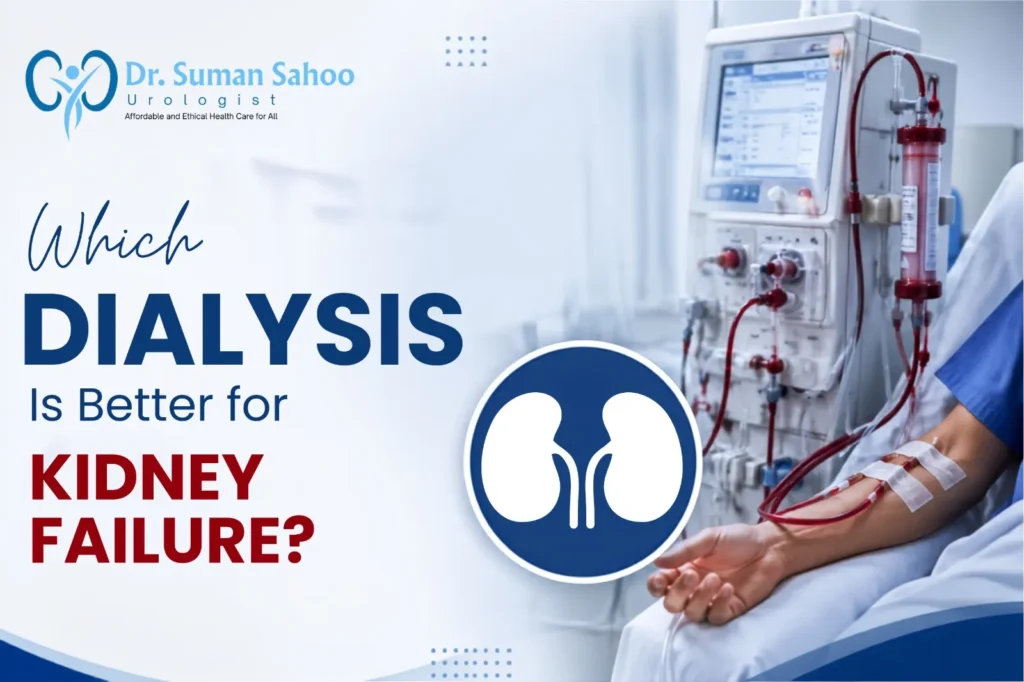
Which Is Better: Hemodialysis or Peritoneal Dialysis?
Choosing between hemodialysis and peritoneal dialysis can feel overwhelming. Hemodialysis filters blood through a machine, while peritoneal dialysis uses the abdominal lining to remove waste and excess fluid. The right option depends on your kidney function, medical condition, lifestyle, home environment, treatment preferences, and specialist advice.
For people comparing Hemodialysis vs Peritoneal Dialysis: Which Is Better for Kidney Failure?, there is no single best option for everyone. Both treatments can replace part of lost kidney function, but their schedules, procedures, risks, responsibilities, and lifestyle impact differ. A kidney specialist can help determine the most suitable treatment after assessing your overall health.
What Is the Difference Between Hemodialysis and Peritoneal Dialysis?
The main difference is how the blood is filtered. Hemodialysis uses a dialysis machine and an external filter to remove wastes and excess fluid from the blood. Peritoneal dialysis relies on the abdominal lining to act as a natural filter for removing waste and excess fluid..
If you are searching for the best dialysis treatment for kidney failure, understanding these differences is the first step toward making an informed decision.
What Is Hemodialysis?
Hemodialysis is a kidney replacement therapy in which blood is circulated through a dialyzer, or artificial kidney, outside the body. The dialyzer helps remove waste products and excess fluid before the filtered blood is returned to the body.
Treatment can take place in a dialysis centre or, for eligible patients, in the comfort of their own home.
How Does Hemodialysis Work?
The process generally involves:
- Accessing the bloodstream through suitable vascular access.
- Moving blood through the dialysis machine.
- Passing blood through a specialised filter.
- Removing waste products and excess fluid.
- Returning filtered blood to the body.
In-centre hemodialysis is commonly performed several times per week, while home hemodialysis may offer different schedules under specialist supervision.
Potential Advantages of Hemodialysis
- Treatment is performed by trained healthcare professionals in a dialysis centre.
- Patients may not need to manage the dialysis machine at home.
- Regular clinical monitoring is available during treatment.
- Home hemodialysis may provide greater scheduling flexibility for selected patients.
- It may be suitable for individuals who are unable to perform peritoneal dialysis.
Possible Challenges of Hemodialysis
- Regular travel to a dialysis centre may be required.
- Vascular access requires ongoing care.
- Some patients may experience fatigue or blood pressure changes during or after treatment.
- Fluid and dietary restrictions may be necessary.
- Treatment appointments can affect work, travel, and daily routines.
What Is Peritoneal Dialysis?
Peritoneal dialysis uses the peritoneum, the lining of the abdomen, as a natural filtering membrane.
A dialysis solution is introduced into the abdominal cavity through a catheter. The dialysis fluid helps remove waste substances and extra fluid from the body.. After a prescribed period, the used solution is drained and replaced with fresh dialysis fluid.Peritoneal dialysis is generally performed at home after appropriate training.
Types of Peritoneal Dialysis
Continuous Ambulatory Peritoneal Dialysis
CAPD involves manual exchanges performed during the day. Patients receive training on how to safely perform exchanges and maintain catheter hygiene.
Automated Peritoneal Dialysis
Automated peritoneal dialysis uses a cycler machine to perform exchanges, often during sleep.
The appropriate method depends on medical requirements, lifestyle, home conditions, and the advice of the healthcare team.
Potential Advantages of Peritoneal Dialysis
- Treatment can generally be performed at home.
- Some patients appreciate greater independence.
- The treatment may offer flexibility for work and daily activities.
- It can be carried out at home, reducing the need for frequent visits to a dialysis centre.
- Automated treatment may take place during sleep.
Possible Challenges of Peritoneal Dialysis
- The catheter requires regular care.
- Strict hygiene is essential.
- Supplies require storage space.
- The patient or caregiver must follow the treatment schedule carefully.
- Infection, including peritonitis, is a significant concern if proper procedures are not followed.
Hemodialysis vs Peritoneal Dialysis: What’s the Difference?
| Feature | Hemodialysis | Peritoneal Dialysis |
| Main filtering method | External dialyzer machine | Peritoneal lining of the abdomen |
| Typical location | Dialysis centre or home | Usually home |
| Vascular access | Required | Abdominal catheter required |
| Treatment pattern | Often scheduled sessions | Exchanges performed regularly |
| Patient involvement | Lower in centre-based treatment | Greater self-management |
| Equipment | Dialysis machine at centre or home | Dialysis solution and possibly a cycler |
| Lifestyle impact | Centre appointments may affect routine | Home-based treatment may offer flexibility |
| Main infection concern | Vascular access infections | Catheter-related infections and peritonitis |
| Suitable for | Patients who can access a dialysis centre or home HD programme | Patients suitable for home-based peritoneal therapy |
The best choice is individualised. The comparison should include medical suitability, treatment safety, lifestyle, home support, and personal preference.
Which Dialysis Is Better for Kidney Failure?
There is no single dialysis option that is best for every person with kidney failure.
The best option may depend on:
- Remaining kidney function
- Heart and blood vessel health
- Previous abdominal surgeries
- Ability to care for dialysis access
- Home environment
- Availability of a caregiver when required
- Work and travel schedule
- Ability to follow treatment instructions
- Personal preference
- Access to a reliable dialysis programme
A patient who values home-based treatment may prefer peritoneal dialysis if medically suitable. Another patient may prefer centre-based hemodialysis because trained professionals manage much of the treatment process. Check our Patient’s Testimonial: https://shorturl.at/2Guv7
Is Peritoneal Dialysis Better Than Hemodialysis?
Peritoneal dialysis is not automatically better than hemodialysis. It may be a suitable option for some patients because it can be performed at home and may provide greater flexibility.
However, peritoneal dialysis requires consistent hygiene, regular exchanges, catheter care, and active patient participation.
The decision should not be based solely on convenience. Medical suitability and the patient’s ability to safely follow the treatment plan are essential.
Is Hemodialysis Better Than Peritoneal Dialysis?
Hemodialysis may be preferred when a patient requires centre-based care, is not a suitable candidate for peritoneal dialysis, or prefers treatment supervised by healthcare professionals.
However, it may require regular visits to a dialysis centre and vascular access care.
A nephrologist or appropriate kidney-care specialist can assess which approach is safer and more practical for the individual patient.
What Factors Should Be Considered Before Choosing Dialysis?
1. Medical Suitability
Certain medical conditions may influence whether a patient is suitable for hemodialysis or peritoneal dialysis.
2. Lifestyle
Patients who work, travel, or have specific daily responsibilities may want to discuss how each option could fit into their routine.
3. Home Environment
Peritoneal dialysis requires a clean, suitable space for treatment and storage of supplies.
4. Support System
Some patients may require assistance from a trained family member or caregiver.
5. Treatment Responsibility
Home dialysis requires patients to follow instructions carefully and consistently.
6. Access to Healthcare
The availability of dialysis centres, trained professionals, emergency support, and follow-up care may influence the decision.
7. Long-Term Treatment Planning
Dialysis choice may change over time. Patients should discuss how the chosen treatment fits into their long-term kidney-care plan.
What Is the Best Dialysis Treatment for Kidney Failure?
The best dialysis treatment for kidney failure is the treatment that safely meets the patient’s medical needs while fitting their lifestyle, ability to manage treatment, and long-term care goals.
Treatment decisions may also involve discussions about:
- Kidney transplantation
- Home dialysis options
- Conservative kidney care when appropriate
- Diet and fluid management
- Medication management
- Vascular or peritoneal access planning
Dialysis is not a cure for kidney failure. It replaces only some functions of healthy kidneys. Early education and treatment planning can help patients understand their options and prepare for kidney replacement therapy.
How Can a Specialist Help You Choose Between Dialysis Options?
Choosing between dialysis treatments requires more than comparing machines and schedules.
Dr Suman Sahoo, a specialist in uro-oncology and complex urinary-system conditions, can help patients understand their kidney-related care pathway and coordinate appropriate specialist evaluation when required. Patients with kidney failure should receive guidance from the appropriate nephrology and dialysis-care team.
If you are searching for the best uro-oncologist in Bhubaneswar, professional evaluation is especially important when kidney problems may be associated with urinary tract conditions, obstruction, tumours, or other complex urological concerns. Visit our Youtube Page link: https://www.youtube.com/@doc_suman_urology_aiims
Best Dialysis Hospital for Hemodialysis and Peritoneal Dialysis: What Should You Look For?
When searching for the best dialysis hospital for hemodialysis and peritoneal dialysis, consider more than the availability of a dialysis machine.
Look for:
- Experienced kidney-care professionals
- Qualified dialysis technicians and nurses
- Infection-control protocols
- Emergency medical support
- Regular laboratory monitoring
- Vascular access care
- Peritoneal dialysis training
- Nutrition and renal diet support
- Patient and caregiver education
- Access to specialist consultations
- Clear treatment and follow-up planning
A comprehensive dialysis programme should support patients throughout treatment rather than focusing only on individual dialysis sessions.
Hemodialysis or Peritoneal Dialysis: Which One Fits Different Lifestyle Needs?
| Lifestyle Priority | Potentially Suitable Option to Discuss |
| Prefers professional supervision during treatment | Centre-based hemodialysis |
| Wants home-based treatment | Peritoneal dialysis or home hemodialysis |
| Wants treatment during sleep | Automated peritoneal dialysis or selected home HD schedules |
| Has limited ability to manage home treatment | Centre-based hemodialysis may be considered |
| Travels frequently | A home-based option may offer flexibility if medically suitable |
| Wants greater control over daily treatment timing | Home dialysis options may be discussed |
This table is a general guide, not a treatment recommendation. Individual medical evaluation is essential.
What Are the Common Misconceptions About Dialysis?
Myth 1: Dialysis Is the Same for Everyone
Fact: Dialysis prescriptions and treatment choices are individualised.
Myth 2: Peritoneal Dialysis Is Always Easier
Fact: Home treatment may offer flexibility, but it requires training, hygiene, and consistent daily management.
Myth 3: Hemodialysis Always Requires a Dialysis Centre
Fact: Home hemodialysis may be an option for selected patients.
Myth 4: Dialysis Cures Kidney Failure
Fact: Dialysis replaces part of kidney function but does not restore healthy kidney function.
Myth 5: Patients Cannot Change Dialysis Methods
Fact: Some patients may change treatment modality when medically appropriate and under specialist guidance.
How Can Patients Prepare for Dialysis?
Patients and families can prepare by:
- Learning about treatment options early
- Asking questions about dialysis access
- Understanding dietary and fluid recommendations
- Discussing home dialysis training
- Planning transportation if centre-based dialysis is selected
- Learning about infection prevention
- Understanding warning signs that require medical attention
- Discussing kidney transplant evaluation when appropriate
Early education can help patients make informed decisions rather than facing dialysis planning during an emergency.
What Is the Difference Between Hemodialysis and Peritoneal Dialysis?
Hemodialysis filters blood outside the body using a dialysis machine and an artificial filter. Peritoneal dialysis uses the lining of the abdomen to filter waste and excess fluid inside the body. The best option depends on medical suitability, lifestyle, home environment, treatment preferences, and specialist advice.
Which Is Better, Hemodialysis or Peritoneal Dialysis?
Neither treatment is universally better. Hemodialysis may suit patients who prefer centre-based professional care, while peritoneal dialysis may suit medically eligible patients who prefer home-based treatment. The best dialysis option is selected according to the patient’s medical condition, lifestyle, support system, and long-term treatment goals.
What Is the Best Dialysis Treatment for Kidney Failure?
The best dialysis treatment for kidney failure is the option that safely meets the patient’s medical needs and can be followed consistently. Hemodialysis and peritoneal dialysis both have benefits and limitations, so the decision should be made with a qualified kidney-care team.
Conclusion: Which Dialysis Option Is Right for You?
Hemodialysis and peritoneal dialysis can both help manage kidney failure, but they differ in how treatment is delivered, where it occurs, and how much daily responsibility the patient assumes. There is no universally superior option. The safest choice depends on medical suitability, lifestyle, support, and specialist guidance. Early counselling can help patients make confident, informed decisions about long-term kidney care. Patients’ can visit our Address to check map link: https://maps.app.goo.gl/YTPpNCgFuUhh5Qp16
FAQs: Hemodialysis vs Peritoneal Dialysis
What is the difference between hemodialysis and peritoneal dialysis?
Hemodialysis uses a machine and external filter to remove wastes and excess fluid from the blood. Peritoneal dialysis uses the abdominal lining as a natural filter and is generally performed at home.
Which is better for kidney failure: hemodialysis or peritoneal dialysis?
Neither is automatically better for everyone. The appropriate option depends on medical condition, lifestyle, home environment, treatment preferences, and specialist assessment.
Is peritoneal dialysis done at home?
Yes. Peritoneal dialysis is generally performed at home after the patient or caregiver receives appropriate training.
Is hemodialysis painful?
Some patients may experience discomfort associated with vascular access or treatment-related effects. Your healthcare team can explain what to expect and how discomfort or complications are managed.
How often is hemodialysis performed?
The schedule varies according to the treatment plan. Centre-based hemodialysis is commonly scheduled several times per week, while home schedules may differ.
How often is peritoneal dialysis performed?
The schedule depends on the type of peritoneal dialysis. Manual exchanges may occur several times during the day, while automated peritoneal dialysis may use a machine during sleep.
Can patients work while receiving dialysis?
Many patients continue working, depending on their health, treatment schedule, occupation, and dialysis modality. Home-based options may offer greater scheduling flexibility for some people.
Can dialysis cure kidney failure?
No. Dialysis replaces some functions of the kidneys but does not cure kidney failure. A kidney transplant may be another treatment option for eligible patients.
What should I consider when choosing a dialysis hospital?
Consider the experience of the kidney-care team, infection-control practices, emergency support, dialysis options, patient education, monitoring facilities, and access to appropriate specialist care.
When should I discuss dialysis options with a doctor?
Ideally, dialysis options should be discussed before kidney failure becomes an emergency. Early planning allows patients to understand treatment choices and prepare appropriately.
Recent Posts

Which Dialysis Is Better for Kidney Failure?
July 15, 2026