How Can a Urological Cancer Doctor Treat NMIBC?
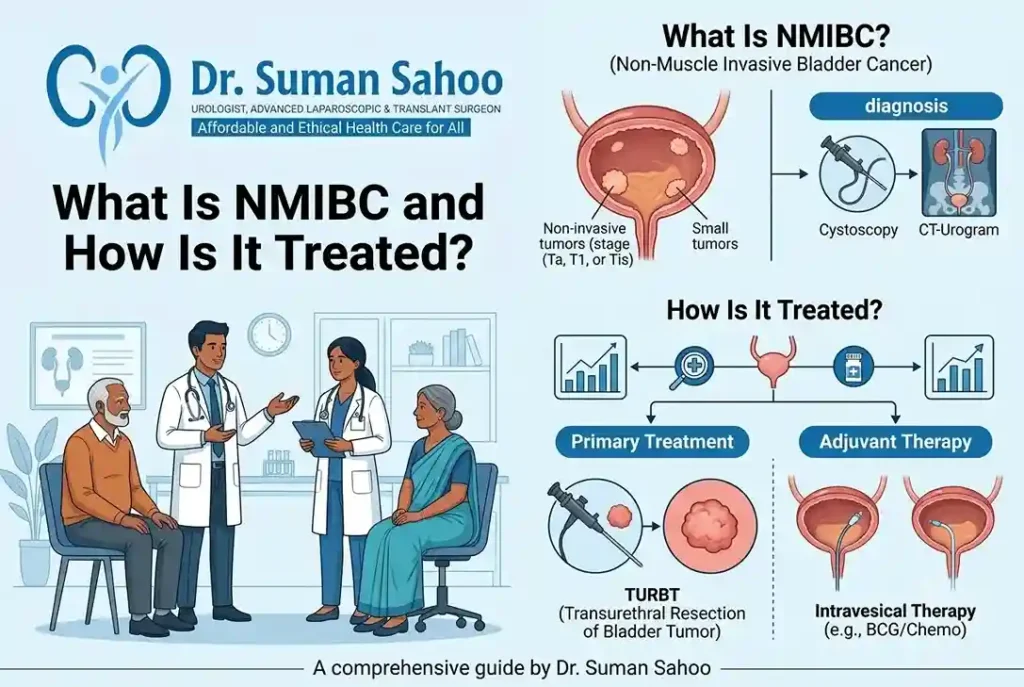
Non-muscle invasive bladder cancer (NMIBC) begins in the bladder lining without invading the bladder muscle. Understanding its stages, diagnosis, TURBT, BCG therapy, surveillance, and recurrence risk helps patients make informed treatment decisions with a qualified urological cancer specialist.
A Urological Cancer Doctor in Bhubaneswar can evaluate non-muscle invasive bladder cancer using pathology, cystoscopy, imaging when appropriate, and tumour-risk assessment. Treatment may include transurethral resection of bladder tumour (TURBT), intravesical therapy such as BCG, surveillance cystoscopy, or additional treatment depending on tumour characteristics and recurrence risk.
What Is Non-Muscle Invasive Bladder Cancer?
Non-muscle invasive bladder cancer treatment focuses on cancers that have not grown into the muscular layer of the bladder wall. NMIBC commonly includes tumours classified as Ta, T1, or carcinoma in situ (CIS).
Unlike muscle-invasive bladder cancer, NMIBC is generally managed with bladder-preserving approaches when clinically appropriate. However, some tumours have a higher risk of recurrence or progression and require closer monitoring and more intensive treatment.
Common NMIBC Characteristics
- Tumour remains within the bladder lining or connective tissue beneath it.
- It may recur after initial treatment.
- Risk varies according to tumour stage, grade, size, number, and previous recurrence.
- Some patients require intravesical therapy.
- Regular follow-up is an important part of long-term management.
What Are the Different NMIBC Stages?
| Stage | General Meaning | Typical Clinical Consideration |
| Ta | Non-invasive papillary tumour | Does not invade deeper bladder tissue |
| T1 | Invades connective tissue beneath the lining | Requires careful risk assessment |
| CIS | Flat cancer limited to the bladder lining | Often considered a high-risk feature |
The tumour grade is also important because it describes how abnormal the cancer cells appear under microscopic examination. Stage and grade work together to help doctors estimate recurrence and progression risks.
What Causes Non-Muscle Invasive Bladder Cancer?
Bladder cancer develops when cells in the bladder undergo abnormal changes that allow uncontrolled growth. Several factors can increase risk.
Important Risk Factors
- Cigarette smoking
- Increasing age
- Certain occupational chemical exposures
- Previous radiation exposure
- Some chemotherapy medicines
- Long-term bladder irritation
- Certain environmental exposures
Smoking is an important modifiable risk factor for bladder cancer. Quitting smoking can support overall health and may reduce future cancer risk.
What Are the Symptoms of NMIBC?
Blood in the urine, known as hematuria, is one of the most common warning signs of bladder cancer. It may be visible or detected only through urine testing.
Other possible symptoms include:
- Frequent urination
- Burning or discomfort while urinating
- Urgency to urinate
- Pelvic discomfort
- Repeated urinary symptoms without an obvious infection
These symptoms do not automatically indicate cancer. Urinary infections, stones, prostate conditions, and other disorders can cause similar symptoms.Unexplained or ongoing blood in the urine should be assessed by a healthcare professional. .
How Is NMIBC Diagnosed?
Diagnosis typically combines several sources of information.
1. Medical History and Examination
A urologist reviews urinary symptoms, smoking history, previous cancers, medications, and relevant health factors.
2. Urine Testing
Urine tests may look for blood, infection, abnormal cells, or biomarkers when clinically appropriate.
3. Cystoscopy
A cystoscope allows the doctor to directly examine the inside of the bladder and identify suspicious areas.
4. TURBT
Transurethral resection of bladder tumour (TURBT) is commonly used to remove visible tumours and obtain tissue for pathological examination.
5. Pathology
The pathology report helps determine tumour type, stage, and grade. These findings are essential for deciding subsequent management.
How Is Non-Muscle Invasive Bladder Cancer Treated?
Treatment depends on the patient’s tumour risk category and pathology findings rather than using one approach for every case.
TURBT
TURBT is commonly the initial treatment for visible NMIBC. The tumour is removed through the urinary passage without making an external incision into the abdomen.
The tissue is then examined to determine the tumour’s characteristics and whether additional treatment is required.
Intravesical Therapy
Intravesical therapy involves administering medication directly into the bladder through a catheter.
Depending on risk and clinical circumstances, treatment may include:
- Intravesical chemotherapy
- Bacillus Calmette-Guérin (BCG)
- Other bladder-directed therapies in selected situations
The objective is to reduce the likelihood of recurrence and, in appropriate patients, progression.
Who May Need BCG Treatment for Bladder Cancer?
BCG is an important treatment option for selected patients with higher-risk NMIBC, particularly certain high-grade tumours and carcinoma in situ.
A BCG treatment for bladder cancer specialists can determine whether BCG is appropriate based on pathology, tumour risk, previous treatment, overall health, and treatment response.
BCG is administered directly into the bladder rather than through a standard intravenous infusion. The schedule and duration depend on the treatment plan.
What Should Patients Know About BCG?
Patients may experience temporary urinary symptoms after treatment, such as:
- Increased urinary frequency
- Burning during urination
- Urgency
- Mild discomfort
- Flu-like symptoms in some cases
More severe or persistent symptoms require prompt communication with the treating medical team.
Why Is TURBT Important in NMIBC?
TURBT serves both therapeutic and diagnostic purposes.
It can:
- Remove visible bladder tumours
- Provide tissue for pathology
- Establish tumour stage and grade
- Help determine recurrence and progression risk
- Guide further treatment
In selected situations, a repeat TURBT may be recommended to ensure adequate tumour removal or obtain more accurate staging. Visit our Youtube page click the link: https://www.youtube.com/@doc_suman_urology_aiims
Why Does NMIBC Require Regular Follow-Up?
One of the defining challenges of NMIBC is its tendency to recur.
Surveillance may involve:
- Follow-up cystoscopy
- Urine cytology when appropriate
- Additional bladder investigations based on risk
- Repeat treatment if recurrence occurs
- Monitoring for progression
The frequency and duration of surveillance are individualized according to the patient’s risk category and treatment history.
What Factors Determine NMIBC Treatment?
Doctors generally consider several factors before selecting a treatment strategy.
| Factor | Why It Matters |
| Tumour stage | Indicates how deeply the tumour has grown |
| Tumour grade | Helps describe cancer aggressiveness |
| Tumour size | Can influence risk assessment |
| Number of tumours | Multiple tumours may indicate greater recurrence risk |
| Recurrence history | Previous recurrence affects future risk |
| CIS presence | Can indicate higher-risk disease |
| Previous treatment | Influences subsequent treatment choices |
| Overall health | Helps determine treatment suitability |
This risk-based approach supports personalized bladder cancer care.
When Should You See a Urological Cancer Doctor?
You should seek medical evaluation if you notice:
- Blood in your urine
- Recurrent unexplained urinary symptoms
- Persistent urinary discomfort
- A history of bladder cancer requiring surveillance
- Abnormal urine test findings
- A suspicious bladder lesion identified during testing
If bladder cancer has already been diagnosed, timely consultation with a Urological Cancer Doctor in Bhubaneswar can help determine the appropriate next step.
How Can Dr Suman Sahoo Help With Bladder Cancer Care?
Dr Suman Sahoo can provide specialist urological evaluation for patients concerned about bladder cancer and other urological cancers. Patients may require a detailed review of cystoscopy findings, pathology reports, previous TURBT procedures, treatment history, and recurrence risk before a management plan is selected.
For patients searching for non muscle invasive bladder cancer treatment, specialist evaluation is particularly important because treatment varies according to tumour risk and individual clinical factors. Check patient’s reviews click: https://bit.ly/4xhNqj7
Can NMIBC Come Back After Treatment?
Yes. NMIBC can recur even after successful initial treatment. The probability depends on factors such as tumour number, size, stage, grade, recurrence history, and treatment response.
Recurrence does not necessarily mean that the cancer has become muscle-invasive. However, every recurrence requires appropriate assessment to determine whether the disease remains non-muscle invasive and whether treatment should be modified.
Can NMIBC Progress to Muscle-Invasive Bladder Cancer?
Some higher-risk NMIBC can progress into deeper layers of the bladder wall. This is why accurate staging, risk classification, appropriate treatment, and surveillance are essential.
Patients with high-risk disease may require closer monitoring and consideration of more intensive treatment strategies when clinically indicated.
What Is the Role of Lifestyle During Bladder Cancer Care?
Medical treatment remains central, but healthy habits can support general well-being.
Patients can discuss:
- Smoking cessation
- Adequate hydration based on medical advice
- Balanced nutrition
- Regular physical activity as tolerated
- Medication adherence
- Attendance at surveillance appointments
Lifestyle measures should complement—not replace—specialist cancer treatment.
Conclusion
NMIBC can often be managed with bladder-preserving treatment, but recurrence and progression risks make accurate diagnosis and structured surveillance essential. TURBT, intravesical therapy, BCG, and follow-up cystoscopy may form parts of care depending on individual risk. Consulting an experienced Urological Cancer Doctor in Bhubaneswar, such as Dr Suman Sahoo, supports evidence-based, personalized decision-making throughout the treatment journey. Visit our Address click on map link: https://maps.app.goo.gl/2wPYfJSB1zwsFS8N6
Frequently Asked Questions
What is non-muscle invasive bladder cancer and how is it treated?
NMIBC is bladder cancer that has not invaded the bladder’s muscular layer. Treatment may involve TURBT, intravesical chemotherapy or BCG, and regular surveillance depending on tumour risk.
Is NMIBC considered serious?
NMIBC is generally different from muscle-invasive bladder cancer, but some forms have significant recurrence or progression risks. Risk classification helps determine how closely the condition should be monitored and treated.
What is TURBT?
TURBT stands for transurethral resection of bladder tumour. It is a procedure used to remove visible bladder tumours and obtain tissue for pathological examination.
Is BCG used for bladder cancer?
Yes. BCG is an intravesical immunotherapy commonly used for selected patients with higher-risk NMIBC, including certain high-grade tumours and carcinoma in situ.
How often should NMIBC patients have cystoscopy?
The surveillance schedule depends on the patient’s recurrence and progression risk, treatment history, and clinical findings. Your urologist will establish an individualized follow-up schedule.
Can bladder cancer return after TURBT?
Yes. NMIBC can recur after TURBT, which is why risk-based surveillance and, when appropriate, additional bladder-directed treatment are important.
Should I book a bladder cancer doctor appointment after seeing blood in my urine?
Unexplained blood in the urine warrants medical evaluation. If you are looking to book a bladder cancer doctor appointment, a urological cancer specialist can investigate the cause and recommend appropriate testing.
Is BCG better than chemotherapy for NMIBC?
Neither treatment is universally better for every patient. The choice depends on tumour risk, pathology, previous treatment, side-effect considerations, and individual clinical circumstances.
Recent Posts

What Are the Common Myths and Facts About Prostate Biopsy?
August 20, 2026