What Is a Normal eGFR Range With the Best Uro Oncologist in Bhubaneswar?
Understanding your eGFR report is important for monitoring kidney health and detecting early kidney problems. A normal eGFR range varies based on age and health conditions. If you have low eGFR results, consulting a best uro oncologist in Bhubaneswar can help evaluate kidney function, chronic kidney disease risks, and suitable treatment options.
What Is a Normal eGFR Range and What Do Your Results Mean?
eGFR (estimated Glomerular Filtration Rate) is a key kidney function test that estimates how effectively your kidneys filter waste from your blood. Understanding your eGFR value helps identify whether your kidney function is normal or requires medical attention.
A healthy kidney filters blood efficiently, maintaining fluid balance and removing toxins from the body. Changes in eGFR levels may indicate reduced kidney function, kidney disease progression, or temporary changes caused by dehydration, medications, or other health conditions.
For individuals experiencing consistently low eGFR levels, consulting a chronic kidney disease specialist for low eGFR can help in early diagnosis and personalised management.
What Is eGFR and Why Is It Important for Kidney Health?
The estimated Glomerular Filtration Rate measures kidney filtering capacity. Doctors usually calculate eGFR using factors such as:
- Serum creatinine levels
- Age
- Gender
- Other clinical parameters
An eGFR test is commonly used for:
- Detecting chronic kidney disease (CKD)
- Monitoring kidney function over time
- Assessing treatment response
- Evaluating kidney health before major procedures
Regular kidney monitoring becomes especially important for people with diabetes, high blood pressure, family history of kidney disease, or previous kidney problems.
Normal eGFR Range: What Do Different Values Mean?
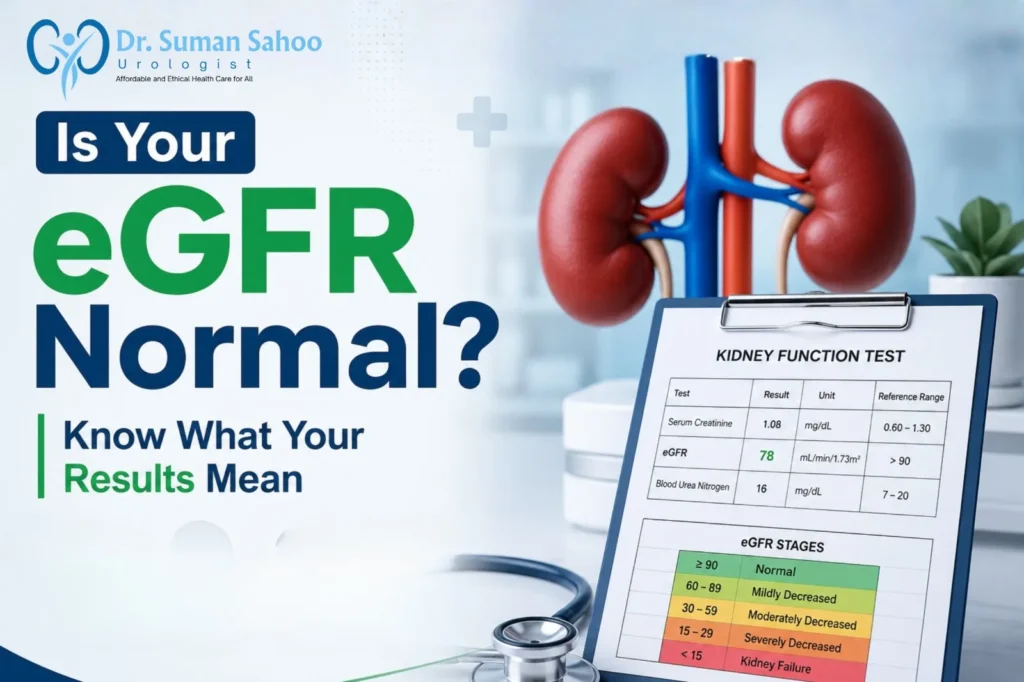
Normal eGFR Range Chart
| eGFR Level (mL/min/1.73m²) | Kidney Function Meaning |
| 90 or above | Generally considered normal kidney function |
| 60–89 | Mild decrease; requires monitoring depending on health condition |
| 30–59 | Moderate kidney function reduction |
| 15–29 | Severe kidney function reduction |
| Below 15 | Kidney failure range requiring specialist evaluation |
Note: A single abnormal eGFR result does not always confirm kidney disease. Doctors evaluate results along with symptoms, medical history, urine tests, and other kidney health markers. Check our Youtube link: https://www.youtube.com/@doc_suman_urology_aiims
What Factors Can Affect Your eGFR Results?
Several factors can influence eGFR readings, including:
1. Age
Kidney filtration ability may naturally decline as people grow older. Therefore, doctors interpret eGFR values according to age-related factors.
2. Hydration Status
Dehydration can temporarily affect kidney function measurements and may lower eGFR values.
3. Medical Conditions
Conditions that may impact kidney function include:
- Diabetes
- High blood pressure
- Kidney infections
- Kidney stones
- Autoimmune disorders
4. Medications
Certain medicines can influence kidney function tests. A doctor may review medications when evaluating abnormal eGFR results.
Understanding Low eGFR: When Should You Seek Medical Advice?
A low eGFR may indicate reduced kidney filtering ability, especially when the value remains consistently below normal levels over time.
Possible signs associated with kidney problems may include:
- Swelling in legs or feet
- Changes in urination
- Fatigue
- High blood pressure
- Loss of appetite
- Nausea
Patients with persistent low eGFR should consider specialist guidance rather than delaying evaluation. You can book nephrologist appointments for low eGFR to understand the underlying cause and receive appropriate care.
eGFR and Chronic Kidney Disease: Understanding the Connection
Chronic Kidney Disease (CKD) develops when kidney function decreases gradually over time. eGFR is one of the important parameters doctors use to classify CKD stages.
CKD management focuses on:
- Protecting remaining kidney function
- Controlling blood pressure
- Managing diabetes
- Reducing kidney stress
- Preventing disease progression
Early diagnosis allows better treatment planning and improves long-term kidney health outcomes.
How Can a Specialist Help Manage Low eGFR Results?
A reduced eGFR value requires proper evaluation to understand whether it is temporary or linked to an underlying kidney condition. A specialist analyses multiple factors before recommending treatment.
A comprehensive kidney evaluation may include:
- Blood tests for kidney function
- Urine protein analysis
- Blood pressure monitoring
- Imaging tests when required
- Medical history assessment
Consulting a best uro oncologist in Bhubaneswar helps patients receive expert guidance for kidney-related concerns, especially when abnormal kidney function requires advanced evaluation. Check patient’s testimonial click: https://bit.ly/3TKvaQq
Can Low eGFR Affect Kidney Transplant Decisions?
In advanced kidney disease cases, eGFR levels help doctors understand kidney function severity and determine future treatment requirements. When kidney function declines significantly, transplant evaluation may become necessary.
A kidney transplant specialist evaluates:
- Overall health condition
- Kidney disease stage
- Suitability for transplantation
- Donor compatibility
- Long-term treatment requirements
Patients searching for a Best Kidney Transplant Specialist in Bhubaneswar should seek experienced medical guidance for proper evaluation and transplant planning.
Kidney Health Management Tips to Support Better eGFR Levels
Maintaining kidney health involves consistent lifestyle habits and medical monitoring.
1. Control Blood Pressure
High blood pressure can damage kidney blood vessels and accelerate kidney function decline.
2. Manage Blood Sugar Levels
Diabetes is one of the leading causes of kidney disease. Proper glucose control helps protect kidney filtration ability.
3. Stay Hydrated
Adequate fluid intake supports kidney function, but patients with kidney disease should follow personalised hydration advice.
4. Avoid Unnecessary Painkillers
Frequent use of certain pain medications may affect kidney health. Always consult a healthcare professional before regular medication use.
5. Maintain a Kidney-Friendly Diet
A balanced diet may include:
- Appropriate protein intake
- Reduced excess salt consumption
- Fresh fruits and vegetables as advised by doctors
- Controlled phosphorus and potassium when required
Expert Kidney Care Guidance by Urologist Dr Suman Sahoo
Why Choose Urologist Dr Suman Sahoo for Kidney Health Evaluation?
Urologist Dr Suman Sahoo provides specialised care focused on diagnosing and managing complex urinary and kidney-related conditions. With a patient-focused approach, he helps individuals understand kidney function reports, evaluate abnormal eGFR results, and make informed decisions regarding treatment options.
His approach includes:
- Detailed evaluation of kidney health reports
- Personalised treatment planning
- Advanced diagnostic assessment
- Patient education about kidney function
- Guidance for complex urological conditions
For individuals concerned about declining kidney function, professional evaluation can help identify problems early and support better kidney health management.
eGFR Report Interpretation: Key Points to Remember
What Does Your eGFR Result Mean?
| eGFR Finding | Possible Meaning | Recommended Action |
| Normal eGFR | Healthy kidney filtration | Continue regular health monitoring |
| Slightly reduced eGFR | Possible early kidney changes | Monitor regularly with doctor guidance |
| Low eGFR | Reduced kidney function | Seek specialist evaluation |
| Rapidly declining eGFR | Possible kidney disease progression | Immediate medical consultation |
Conclusion
Understanding your eGFR results helps identify kidney health changes at an early stage. Regular monitoring, healthy lifestyle practices, and expert medical consultation can protect kidney function. Consulting a best uro oncologist in Bhubaneswar ensures accurate evaluation and personalised care for low eGFR concerns, chronic kidney disease risks, and advanced kidney treatment requirements. Early action supports better long-term outcomes.
Related Kidney Health Topics
Building awareness about kidney function helps patients make informed healthcare decisions. Important related topics include:
- Understanding chronic kidney disease stages
- Early signs of kidney problems
- Kidney function tests explained
- Causes of low eGFR levels
- Kidney transplant evaluation process
- Kidney-friendly lifestyle habits
These connected topics create a complete kidney health information resource for patients seeking reliable guidance. Visit Our Address click: https://maps.app.goo.gl/XLsnaafCJcvALVD86
FAQs
1. What Is a Normal eGFR Range for Adults?
A normal eGFR range for most adults is generally considered around 90 or above mL/min/1.73m². However, doctors interpret results based on age, health conditions, and other kidney markers.
2. Is an eGFR Below 60 Always a Kidney Disease?
An eGFR below 60 may indicate reduced kidney function, but doctors usually consider whether the reduction continues for three months or longer along with other test results before confirming chronic kidney disease.
3. Can eGFR Levels Improve Naturally?
In some cases, eGFR may improve if temporary causes such as dehydration or certain medication effects are corrected. Long-term kidney disease requires medical management and regular monitoring.
4. What Is the Normal eGFR Range and What Do Your Results Mean?
The normal eGFR range is generally 90 or higher, indicating healthy kidney filtration. Lower values may suggest reduced kidney function and require evaluation based on symptoms, medical history, and additional kidney tests.
5. When Should I Book a Nephrologist Appointment for Low eGFR?
You should book a nephrologist appointment if your eGFR remains low, decreases over time, or is associated with symptoms such as swelling, urinary changes, fatigue, or uncontrolled blood pressure.
6. Can Lifestyle Changes Improve Kidney Health?
Healthy lifestyle habits such as controlling blood pressure, managing diabetes, maintaining a balanced diet, avoiding harmful medications, and regular medical check-ups can support kidney health.